5 Fascinating Facts About the Ostrich: The World’s Largest Flightless Bird

Stage bit

5 Fascinating Facts About the Ostrich: The World’s Largest Flightless Bird

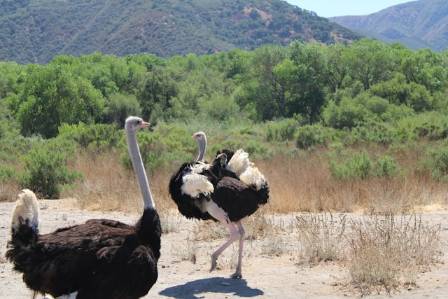
The ostrich (Struthio camelus) stands unrivaled as the largest and heaviest living bird on Earth, a towering icon of Africa’s savannas and arid landscapes. Belonging to the ratite family—a group of flightless birds characterized by flat breastbones—ostriches share their lineage with equally unique relatives like emus, cassowaries, rheas, and kiwis, each adapted to thrive in distinct corners of the globe. In recent decades, taxonomic research has led authorities to classify the Somali ostrich (Struthio molybdophanes), native to the dry regions of East Africa, as a separate species from the common ostrich found across sub-Saharan Africa. Beyond their imposing size, ostriches hold a host of remarkable records and evolutionary quirks that set them apart from all other avian species. Below are five captivating facts that shed light on these extraordinary birds.

N

Nora

Mic note

House tip

The full bit continues below under the club spotlight.

Room

Open Mic Desk


The ostrich (Struthio camelus) stands unrivaled as the largest and heaviest living bird on Earth, a towering icon of Africa’s savannas and arid landscapes. Belonging to the ratite family—a group of flightless birds characterized by flat breastbones—ostriches share their lineage with equally unique relatives like emus, cassowaries, rheas, and kiwis, each adapted to thrive in distinct corners of the globe. In recent decades, taxonomic research has led authorities to classify the Somali ostrich (Struthio molybdophanes), native to the dry regions of East Africa, as a separate species from the common ostrich found across sub-Saharan Africa. Beyond their imposing size, ostriches hold a host of remarkable records and evolutionary quirks that set them apart from all other avian species. Below are five captivating facts that shed light on these extraordinary birds.

Ostriches Are the Fastest Two-Legged Land Creatures on Earth

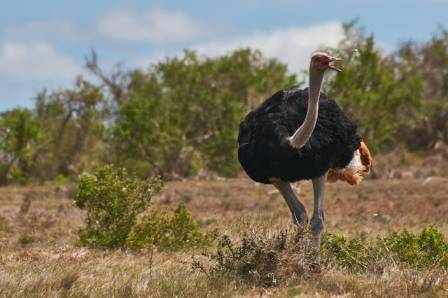
Ostriches are built for speed, with long, muscular legs and a streamlined body that lets them reach a top running speed of 70 kilometers per hour (43.5 miles per hour)—a feat that makes them not only the fastest land bird but also the swiftest two-legged creature on the planet, outpacing most flying birds in horizontal speed. When sprinting at full tilt, an ostrich covers an astonishing 5 meters (16.4 feet) with each stride, propelled by powerful thigh muscles that allow it to accelerate rapidly and maintain high speeds for short bursts. This incredible speed is a critical survival adaptation, enabling ostriches to outrun predators like lions, leopards, and hyenas in the open savanna, where their lack of flight leaves them with few other escape options. Even young ostriches can run at speeds of 50 km/h within months of hatching, a testament to the species’ innate athleticism.

Ostrich Eggs Are the Largest of Any Bird—Yet the Smallest Relative to Body Size
Ostriches lay the largest eggs of any living bird, with a single egg measuring up to 15 centimeters (6 inches) in length and weighing as much as 1.4 kilograms (3 pounds)—roughly 20 times the size of a domestic chicken’s egg. These eggs are encased in a thick, hard shell that can support the weight of an adult human, protecting the developing embryo from predators and environmental damage. What makes ostrich eggs even more fascinating, however, is that they are the smallest eggs relative to the mother’s body size of any bird species. An adult female ostrich can weigh over 120 kilograms (265 pounds), meaning her egg accounts for just 1.1% of her body weight—a stark contrast to a chicken egg, which makes up about 3% of a hen’s body weight. This proportional difference is an evolutionary advantage, allowing female ostriches to lay multiple eggs (up to 15 per clutch) without expending excessive energy or hindering their mobility.

Ostriches Have the Largest Eyes of Any Land Animal

Despite their massive size, ostriches have relatively small brains—but their eyes are the largest of any land animal, measuring a whopping 5 centimeters (2 inches) in diameter, about the size of a tennis ball. These enormous eyes are equipped with long, thick eyelashes that shield them from the harsh African sun, dust storms, and flying debris, while their keen eyesight allows them to spot predators from a distance of up to 3 kilometers (1.9 miles). This exceptional visual acuity is vital for survival in the open savanna, where early detection of danger can mean the difference between life and death. The eyes are positioned on the sides of the ostrich’s head, providing a wide field of vision that lets them monitor their surroundings for threats even while feeding on plants and seeds.

Ostriches Don’t Bury Their Heads in Sand—But They Do Eat Stones to Digest Food

One of the most persistent myths about ostriches is that they bury their heads in the sand when frightened, a tale likely popularized by the Roman historian Pliny the Elder in the first century AD. In reality, ostriches never engage in this behavior; when threatened, they either run away at top speed or drop to the ground and lie flat, using their spotted plumage to blend into the savanna vegetation. A far more intriguing truth about ostriches is their habit of ingesting small stones, pebbles, and gravel—known as gastroliths—to aid digestion. Since ostriches lack teeth to chew their food, these hard particles accumulate in their gizzard, a muscular organ that grinds down tough plant matter, seeds, insects, and even small vertebrates. The gastroliths act as a natural “grinding mill,” breaking down food into smaller, more digestible pieces that can be absorbed by the intestines. Over time, the stones wear down and are replaced with new ones, a process that is essential for the ostrich’s survival on its varied diet.

Ostriches Are Flightless Because of Their Flat Sternum (No Keel for Wing Muscles)
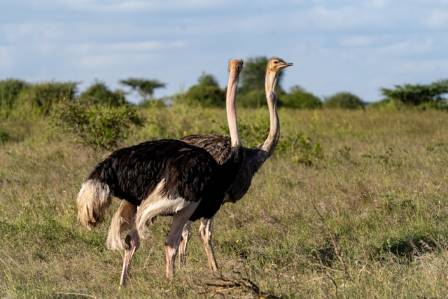
The ostrich’s inability to fly stems from a key anatomical feature tied to its membership in the ratite family. The word “ratite” comes from the Latin ratis, meaning “raft,” a reference to the group’s flat, raft-like sternum (breastbone). Unlike flying birds, which have a prominent, ridge-like keel on their sternum to anchor the powerful flight muscles needed to flap their wings, ratites have a smooth sternum with no keel. This means that even if ostriches had wings large enough to generate lift, they would lack the muscle mass required to power flight. Ostriches’ wings are not useless, however—they serve as balance aids when running at high speeds, help regulate body temperature by shading the bird from the sun, and are used in courtship displays, where males spread their wings to show off their striking black-and-white plumage to attract females. This evolutionary trade-off—sacrificing flight for speed and size—has allowed ostriches to become one of the most successful and iconic species in the African ecosystem.

More from this set

ST

SET · en

Mastering the Art of Grilling the Perfect Steak: 8 Essential Tips

Mastering the Art of Grilling the Perfect Steak: 8 Essential Tips

Grilling a steak is an art form that can elevate any meal to new heights. Whether you're a seasoned chef or a novice cook, achieving that perfect steak is within your reach. With these eight essential tips, you’ll impress your friends and family with steakhouse-quality results right from your backyard grill.

ST

SET · en

A Guide to Handmade Felt Wool Products for Home and Pet

A Guide to Handmade Felt Wool Products for Home and Pet

Crafted from 100% natural wool by skilled artisans, handmade felt products offer a unique blend of sustainability, durability, and cozy aesthetics. These items bring warmth, texture, and artisanal charm to everyday life, from home decor to pet accessories. The following overview highlights key categories of high-quality felt wool goods that combine traditional craftsmanship with modern design.

ST

SET · en

Understanding What a Latte Is

Understanding What a Latte Is

A latte is one of the most popular coffee drinks in the world, known for its smooth, mild flavor and creamy texture. Coffee itself is incredibly versatile, with many different preparation styles that highlight different aspects of the coffee bean.

ST

SET · en

Chinese Fried Dough Sticks

Chinese Fried Dough Sticks

Walk into almost any dim sum restaurant and you’ll likely spot some version of youtiao. Known in Mandarin as “oil sticks,” these long, golden strips of fried dough are light, airy, and slightly crisp—often compared to savory doughnuts or even churros. In China, they’re commonly eaten at breakfast alongside congee, but similar versions also appear across Southeast and East Asia, including Thailand, Laos, Cambodia, and the Philippines, often under different local names.

ST

SET · en

Grasslands Explained

Grasslands Explained

Grasslands are known by various names depending on their location. In the U.S. Midwest, they’re called prairies. In South America, these vast grass-covered areas are referred to as pampas. The extensive grasslands of Central Eurasia are called steppes, while the grassy plains of Africa are known as savannas. Despite the different names, what unites them is their dominant vegetation: grasses.

ST

SET · en

Essential Steps for Starting a Successful Balcony Garden

Essential Steps for Starting a Successful Balcony Garden

Growing a personal vegetable garden filled with fresh greens, aromatic herbs, or bright cherry tomatoes is a wonderful aspiration. Even if you lack a traditional backyard, a lack of extensive outdoor acreage should not prevent you from cultivating a thriving green space. Apartment residents can easily transform an underutilized patio or balcony into a lively and joyful sanctuary. Urban container gardening allows you to experience all the therapeutic and practical benefits of agricultural production within a small footprint. All you truly need to begin this rewarding journey is a sturdy balcony railing, a selection of appropriate containers, a few basic tools, and a willingness to learn and experiment with nature.