Stage bit
Fundamentals of Oil Painting: A Step-by-Step Simple Still Life
If you have ever been intrigued by oil paints but felt intimidated by the technicalities of mixing mediums like linseed oil and turpentine, this introductory still life study is designed for you. This lesson utilizes a single, straightforward medium mixture throughout the process and highlights the similarities between oils and the acrylic techniques used in previous tutorials.
Audrey Kathleen Pembroke
Mic note
House tip
The full bit continues below under the club spotlight.
Room
Open Mic Desk
If you have ever been intrigued by oil paints but felt intimidated by the technicalities of mixing mediums like linseed oil and turpentine, this introductory still life study is designed for you. This lesson utilizes a single, straightforward medium mixture throughout the process and highlights the similarities between oils and the acrylic techniques used in previous tutorials.
While traditional oil recipes can be complex, mastering them all is not essential to starting. The primary shift when transitioning from acrylics to oils is simply how you dilute your pigments.
Essential Materials
Brushes and Tools
-
Coloured Ground Brush: A 1.5-inch decorator’s brush (such as a Purdy XL Monarch Elite).
-
Flat Brush: A "Bright" shape synthetic or natural hair brush (e.g., Isabey Isacryl Size 6).
-
Detail Brush: A small round nylon brush, approximately 5mm in diameter.
-
Palette Knife: A diamond-shaped, cranked-handle knife (e.g., RGM size 45) for mixing.
Support and Setup
-
Surface: A 7 x 5-inch cotton duck canvas board, pre-primed with white acrylic gesso.
-
Palette: A wooden or disposable tear-off palette.
-
Sketching: A 0.7mm brown acrylic marker (such as Montana Shock Brown).
-
Cleanup: Kitchen rolls or paper towels.
The Oil Color Palette
-
Titanium White (Alkyd version dries faster)
-
Burnt Umber (Alkyd version suggested)
-
Winsor Blue (Phthalo Blue, Green Shade)
-
Burnt Sienna
-
Cadmium Yellow Pale
-
Pale Umber (Acrylic paint for the initial ground)
Understanding the Medium: Swapping Water for Oil
In oil painting, a "medium" is added to the paint to alter its flow, transparency, and drying time. For this project, we are using a classic combination of two ingredients:
-
Refined Linseed Oil: Derived from flax seeds, this oil adds gloss and transparency. It dries thoroughly over three to five days, making it excellent for initial layers.
-
Odourless Mineral Spirits (OMS): A safer alternative to turpentine, OMS "cuts" through the oil to thin the paint. Gamsol is a highly recommended brand for its safety and low vapor levels.
The Recipe
For this study, mix your medium in a ratio of 3 parts Odourless Mineral Spirits to 1 part Refined Linseed Oil.
Remember that "less is more" with oil mediums. You only need a small amount to make the paint fluid; using too much will cause the paint to slide around the canvas rather than adhere to it.
Step-by-Step Execution
Step 1: The Acrylic Ground and Sketch
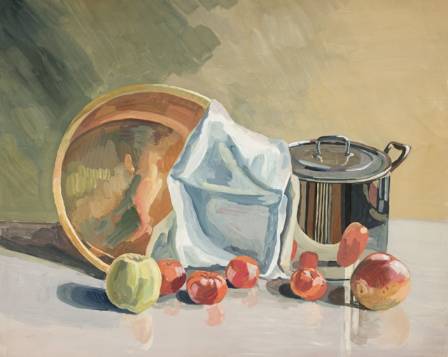
We begin with acrylics to establish a fast-drying foundation. Apply a thin layer of Pale Umber acrylic thinned with a little water over the canvas. Once dry, use a brown acrylic marker to sketch the basic shapes of the coffee cup, saucer, and spoon.
Step 2: Blocking in the Background
Switching to oils, mix Burnt Umber and Burnt Sienna with a touch of medium. Scrub this dark warmth around the spoon handle. Add Titanium White to the mix to create a cooler, lighter tone for the tabletop area around the cup. This contrast helps define the positive form of the cup.
Step 3: Establishing Mid-tones and Texture
Darken the shadows around the handle with pure Burnt Umber. While the paint is wet, it will blend easily. Use a "scumbling" technique—scrubbing a dry brush with a mix of Titanium White and Burnt Umber—across the top third of the canvas to create a textured wall effect. Apply a thin wash of Burnt Sienna inside the cup for the coffee base.
Step 4: Introducing the Turquoise
Mix Titanium White with a small amount of Winsor Blue. To keep the color from being too "electric," add a tiny bit of Burnt Sienna to neutralize it into a sophisticated grey-turquoise. Block in the saucer and include a circular shape in the top right to suggest the scene continues beyond the frame.
Step 5: Increasing Saturation
Intensify the coffee color inside the cup with a stronger Burnt Sienna and White mix. Use the small round brush to apply a mix of Cadmium Yellow Pale and White along the edges of the cup and saucer. This acts as a bridge between the cool turquoise and warm oranges.
Step 6: Softening Edges and Highlights
Mix a cream tone using Titanium White and a hint of Cadmium Yellow. Use this to soften the yellow highlights and paint the center of the cup. If the bottom edge of the saucer feels too sharp, "break" the edge by blurring it into the background; this prevents the viewer's eye from sliding off the bottom of the canvas.
Step 7: Tonal Range and Final Highlights
Apply thick, "impasto" highlights of pure Titanium White to the brightest spots on the ceramic cup and the metal spoon. This establishes the full tonal range from the deepest Umbers to the brightest whites.
Step 8: Final Refinement
Refine the shadows around the handles and inside the spoon. Crisp up the rim of the cup with bright cream notes. Finally, add a few expressive dashes of Burnt Sienna to the saucer’s rim to tie the warm and cool tones together.
This simple study demonstrates that you don't need complex formulas to achieve a professional, painterly result. By managing your edges and keeping your medium simple, you can complete a vibrant oil study in approximately one hour.
More from this set
SET · en

Amazing Cliff Jumps Around the World
Cliff jumping is an adventure that demands courage, confidence, and a willingness to challenge your fears. For some people, it is a way to conquer their nerves, while for others, it is simply an exciting experience to share with friends.
SET · en

Ten Incredible Truths About Our Home Planet
Every year in April, people around the globe celebrate Earth Day to honor the world we inhabit. Since its inception in 1970, this day has served as a vital platform for addressing environmental hurdles and fostering a commitment to conservation for future generations. While Earth Day provides a specific moment for reflection, the uniqueness of our world suggests that every day should be dedicated to its care. To celebrate this magnificent world, here is a collection of ten remarkable facts that highlight the complexity and beauty of Earth.
SET · en

How to Receive Everlasting Life
The most amazing assurance in life is knowing with confidence that you possess eternal life and will be with God forever after death. In contrast, the most terrifying uncertainty is being unsure about your eternal future.
SET · en
A Memory of Giant Sunflowers
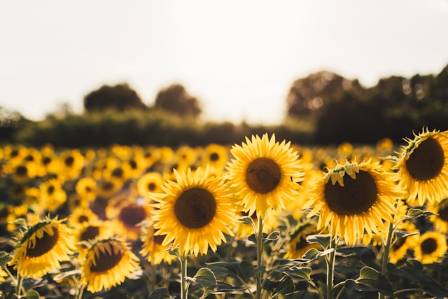
His name was Bob Davis, and he was famous for growing sunflowers that could reach around 15 feet tall. I once dated his niece, Edie May, and even though nearly fifty years have passed, I still remember both her and those enormous flowers fondly.
SET · en

Wonders of Wildlife’s Sea Turtle Center: Rescuing and Rehabilitating Endangered Turtles
Johnny Morris' Wonders of Wildlife National Museum & Aquarium (WOW) in Springfield, Mo., has once again stepped up for endangered sea turtles, welcoming its fourth group of critically ill loggerheads alongside its first-ever group of green and Kemp’s ridley sea turtles. The 16 cold-stunned turtles arrived on January 25 via private aircraft, part of a rescue mission coordinated by Turtles Fly Too, NOAA, the New England Aquarium, and the U.S. Fish and Wildlife Service. Flown from Boston to Springfield, they were met by WOW’s expert animal care team and transported to the aquarium’s Sea Turtle Center—marking the fourth consecutive year WOW has participated in such rescue efforts, aligning with founder Johnny Morris’ vision to inspire conservation among Midwestern families.
SET · en
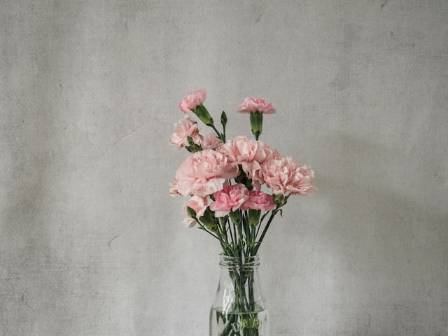
Everything You Need To Know About Carnations
Carnations belong to the genus Dianthus and rank among the world’s most familiar and enduring flowers. People have cultivated these flowers for more than 2,000 years, giving carnations a remarkably long history alongside human culture.