These 10 Megacities Are Home to Over 250 Million People

Stage bit

These 10 Megacities Are Home to Over 250 Million People

Here is a look at the most populous metropolitan areas on the planet, highlighting their immense scale and global significance.

J

John Ward

Mic note

House tip

The full bit continues below under the club spotlight.

Room

Open Mic Desk

Here is a look at the most populous metropolitan areas on the planet, highlighting their immense scale and global significance.

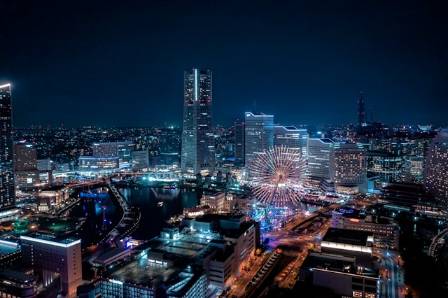
Tokyo-Yokohama, Japan

Population: 37,732,000
The Greater Tokyo Area, encompassing Tokyo Metropolis and key neighboring cities like Yokohama, Kawasaki, and Saitama, is the world's most populous urban region. Its continuous built-up area spans approximately 3,178 square miles (8,231 km²), comparable in size to the island of Puerto Rico. Beyond its demographic scale, it holds the distinction of hosting the planet's second-largest urban economy, trailing only New York City. Remarkably, despite its vast size, it is consistently ranked as one of the safest and most livable major metropolitan areas globally.

Jakarta, Indonesia

Population: 33,756,000
Situated on Java, the world's most densely populated island, Jakarta serves as the political, economic, and cultural nucleus of Indonesia. The Greater Jakarta metropolitan area, covering 1,369 square miles (3,546 km²), includes the capital's special region and the integrated urban fabric of surrounding municipalities such as Bogor, Depok, Tangerang, and Bekasi. It is the dominant urban agglomeration and economic center in Southeast Asia.

Delhi, India

Population: 33,226,000
Delhi, a city and union territory with a rich historical legacy, anchors the Indian subcontinent's largest urban sprawl. The National Capital Territory of Delhi, which includes the capital city of New Delhi, is home to 18.3 million people. This core expands into the National Capital Region (NCR), a planning area that incorporates booming satellite cities like Faridabad, Ghaziabad, Gurugram, and Noida, forming a massive agglomeration of over 33 million. With an estimated annual growth rate of 2.73%, it is one of the fastest-expanding megacities worldwide.

Guangzhou-Foshan, China

Population: 26,940,000
As the capital of Guangdong province, Guangzhou is renowned as the heartland of Cantonese culture and hosts the world's largest trade fair. While the city proper houses around 18.7 million people, its contiguous urban area merges with the neighboring city of Foshan, creating the world's fourth-largest metropolitan region. It is crucial to note that Guangzhou is the central node of the Pearl River Delta (PRD) megalopolis—a massive, interconnected urban web that includes Shenzhen, Hong Kong, Macau, and other major cities, collectively housing an estimated 85 million residents in the broader Greater Bay Area.

Mumbai, India

Population: 24,973,000
India's financial capital, Mumbai, has a city population of approximately 17.2 million. The broader Mumbai Metropolitan Region supports nearly 25 million inhabitants. As a global financial hub, it frequently ranks among the world's top cities for wealth and billionaire residents. Bolstered by a strong annual growth rate of around 2.1%, its global economic influence is projected to rise significantly in the coming years.

Manila, Philippines

Population: 24,922,000
While the City of Manila itself has a population of 1.8 million, it serves as the core of the National Capital Region (Metro Manila). This administrative region—a collection of highly urbanized cities including Quezon City and the financial hub of Makati—has an official population of nearly 13 million. The functional urban area, however, expands to nearly 25 million, making it the sixth-largest urban agglomeration globally and the undisputed center of Philippine economy, culture, and government.

Shanghai, China

Population: 24,073,000
A global powerhouse in finance and innovation, Shanghai boasts the largest city-proper economy in China. Its administrative area, covering 2,448 square miles (6,341 km²), contains almost 24.9 million people, making it the world's second-largest city by this measure after Chongqing. The slightly smaller continuous built-up area, which is the basis for this ranking, is home to just over 24 million residents. Its status is reinforced by hosting the world's busiest container port.

São Paulo, Brazil

Population: 23,086,000
São Paulo is the most populous city in Brazil, the Americas, and the entire Southern Hemisphere. The city proper is home to 12.3 million people, and it is the largest Portuguese-speaking city worldwide. The expanded metropolitan area, which includes cities like Guarulhos and São Bernardo do Campo, forms a colossal urban region of over 23 million people, driving the largest metropolitan economy in Latin America. A notable cultural fact is that São Paulo hosts the largest ethnic Japanese community outside of Japan.

Seoul-Incheon, South Korea

Population: 23,016,000
The capital of South Korea, Seoul, is a global center for technology, finance, and culture. The city itself houses close to 10 million people, but its greater urban area seamlessly incorporates the metropolis of Incheon and much of Gyeonggi province, creating a combined population of 23 million. Like Tokyo, it is frequently cited as one of the world's safest and most livable major cities, despite having an urban density roughly five times greater than the New York metropolitan area.

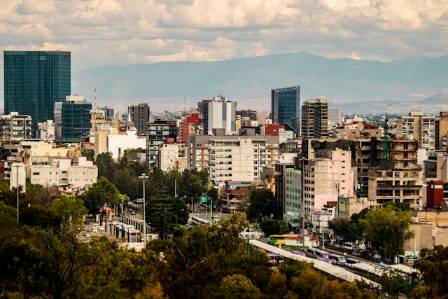
Mexico City, Mexico

Population: 21,804,000
A vibrant and sprawling fusion of history, culture, and commerce, Mexico City is the most populous city in North America, with 9.2 million residents within its official limits. Its wider metropolitan area extends across dozens of municipalities from the State of Mexico and Hidalgo, forming an urban agglomeration of nearly 22 million people. It stands as one of the most significant and productive economic clusters in the Western Hemisphere.

More from this set

ST

SET · en

Log Cabin Living Room Ideas

Log Cabin Living Room Ideas

Step into the inviting atmosphere of log cabin living rooms, where rustic beauty meets everyday comfort. If you love the warmth of natural wood, stone fireplaces, and cozy interiors, these stunning cabin-inspired spaces will spark plenty of ideas for your own home.

ST

SET · en

Discovering the Mysteries of the Ancient Wild: Artistic Perspectives on Forest Imagery

Discovering the Mysteries of the Ancient Wild: Artistic Perspectives on Forest Imagery

Step into the transcendental realm of primeval woodlands, where the boundaries between the natural world and artistic expression blur to produce captivating landscapes on canvas. This exploration into the genre of forest painting reveals the underlying secrets and varied creative perspectives embedded within these woodland scenes. These ancient groves have historically served as a profound source of fascination and creativity. Whether capturing the fiery palette of autumn or the rhythmic play of light through a dense canopy, every stroke of the brush seeks to immortalize the delicate splendor of nature’s greatest work.

ST

SET · en

Fascinating Insights About Kittens for Young Readers

Fascinating Insights About Kittens for Young Readers

Kittens are widely considered some of the most charming animals on earth. These tiny, velvety, and energetic creatures have a unique way of brightening our day. Whether you are already a cat enthusiast or simply curious about nature, kittens possess many remarkable qualities. Understanding their development and behaviors makes these young felines even more impressive.

ST

SET · en

A Guide to Handmade Felt Wool Products for Home and Pet

A Guide to Handmade Felt Wool Products for Home and Pet

Crafted from 100% natural wool by skilled artisans, handmade felt products offer a unique blend of sustainability, durability, and cozy aesthetics. These items bring warmth, texture, and artisanal charm to everyday life, from home decor to pet accessories. The following overview highlights key categories of high-quality felt wool goods that combine traditional craftsmanship with modern design.

ST

SET · en

The least trustworthy 3D printer brand is still the best

The least trustworthy 3D printer brand is still the best

Bambu Lab has come to represent two very different sides of the 3D printing industry. On one side, it is an exceptionally successful company that brought 3D printing to a much broader audience by making the technology easier to use, more approachable, and more affordable. On the other, it has adopted strategies reminiscent of companies such as Apple and Nintendo, building a tightly controlled ecosystem and using its legal resources to protect that ecosystem.

ST

SET · en

Landmark rockets and the engineering breakthroughs

Landmark rockets and the engineering breakthroughs

Rocket technology has advanced through many individual engineering achievements rather than through one revolutionary invention. Certain vehicles introduced propulsion concepts that later became standard practice, while others demonstrated new possibilities in lightweight construction, reusable components, or manufacturing methods. Together, these designs influenced the development of launch vehicles far beyond the missions for which they were originally created.