Stage bit
The least trustworthy 3D printer brand is still the best
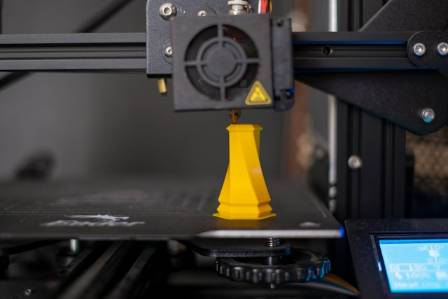
Bambu Lab has come to represent two very different sides of the 3D printing industry. On one side, it is an exceptionally successful company that brought 3D printing to a much broader audience by making the technology easier to use, more approachable, and more affordable. On the other, it has adopted strategies reminiscent of companies such as Apple and Nintendo, building a tightly controlled ecosystem and using its legal resources to protect that ecosystem.
Arian Bellrose
Mic note
House tip
The full bit continues below under the club spotlight.
Room
Open Mic Desk
Bambu Lab has come to represent two very different sides of the 3D printing industry. On one side, it is an exceptionally successful company that brought 3D printing to a much broader audience by making the technology easier to use, more approachable, and more affordable. On the other, it has adopted strategies reminiscent of companies such as Apple and Nintendo, building a tightly controlled ecosystem and using its legal resources to protect that ecosystem.
For better or worse, Bambu Lab has established itself firmly in the market, and there is little indication that the company will disappear anytime soon.
Bambu Lab Is Booming
The Printer Brand Is Everywhere
A few weeks ago, a colleague based in the United States mentioned being surprised to find 3D printers and filament for sale at a nearby Target store. Although I am not based in the U.S., I had a similar reaction when I discovered 3D printers sitting on the shelves of an office supply retailer in Australia. In fact, I purchased my own printer from one of those stores because driving there was considerably less expensive than having the machine shipped.
It was probably already clear that the products in question were Bambu Lab printers and the company’s own filament. The fact that these machines are now being sold alongside everyday products such as toilet paper and USB cables says a great deal about the company’s growth. It is particularly notable because Bambu Lab is the only 3D printer brand stocked in those stores.
Looking at everything Bambu Lab has accomplished, its rapid rise becomes easier to understand. The company was not the first manufacturer to attempt to transform home 3D printing. Instead, it was one of the first to make that transformation genuinely successful. A major part of its strategy was removing many of the frustrating aspects that had traditionally come with the hobby.
For years, printer calibration represented a major obstacle. Experienced owners often disliked dealing with it, while potential newcomers could be discouraged before they even started. Bambu Lab placed automatic bed leveling at the center of its machines, and later models continued improving convenience with features such as tool-free nozzle replacement and touchscreens that provide step-by-step guidance for maintenance.
The company has advanced considerably since 2022, when its first X1 printer exceeded its Kickstarter targets. More recent machines have introduced features once associated with professional equipment, including dual-nozzle printing and heated chambers, while continuing to appeal to enthusiast users. Bambu Lab has generally offered a stronger overall value proposition than many competitors, helping it stand out in a crowded market.
The company’s momentum became especially apparent in 2026, when Bambu Lab overtook Creality to become the leading budget 3D printer brand by sales. The increase in demand was also credited with helping revive the consumer segment of the industry after a two-year downturn.
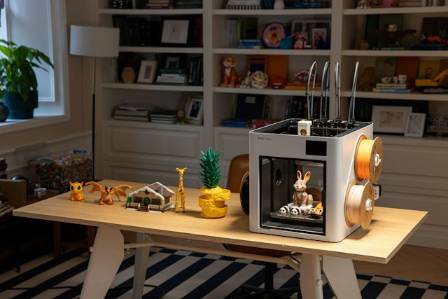
Sales Are Growing Despite Controversies
A Closed Ecosystem and Closed Source
Bambu Lab has carefully protected the territory it has established in the 3D printing market. Its approach is perhaps best described as a plug-and-print ecosystem. Rather than functioning simply as another hardware manufacturer within the larger 3D printing community, the company has created an integrated platform that combines hardware, software, services, and infrastructure.
One major part of this strategy is MakerWorld, the company’s model-sharing platform and one of the largest repositories of its kind. Although MakerWorld supports common file formats such as STL, 3MF, and OBJ, just like platforms including Printables and Thingiverse, it strongly emphasizes Bambu Lab hardware. The site contains numerous print profiles specifically optimized for the company’s machines, including profiles designed for compact models such as the A1 mini.
The Bambu Lab mobile application is another important component of the ecosystem, and it performs many of the functions users would expect from a modern 3D printing platform. Models can be sent directly to a printer through MakerWorld, prints can be monitored remotely, and users can keep track of filament status.
For someone who remains entirely within this ecosystem, the experience can be remarkably straightforward. It is possible to operate a Bambu Lab printer with very little dependence on a traditional computer-based workflow.
However, this convenience has also created concerns. Bambu Lab has gradually introduced additional restrictions around how outside software interacts with its printers. The company first required slicers attempting to communicate with its machines through a remote cloud connection to use its own Bambu Connect plugin. It later took strong legal action against an open-source project that attempted to work around that requirement.
This approach has prompted some members of the 3D printing community to wonder whether the company could impose even more restrictions on its ecosystem in the future.
Bambu Lab entered the market at an ideal moment and succeeded in building an enormous user base. Its focus on making 3D printing approachable can reasonably be seen as beneficial to the broader industry as well as to individual users. Regardless of whether someone owns a Bambu Lab printer, getting started with 3D printing has arguably never been easier.
Can Competitors Catch Up With Bambu Lab?
The Industry Has Seen This Before
During the late 2000s, home 3D printing was only beginning to gain widespread attention. At the time, dedicated hobbyists represented much of the community, and companies such as MakerBot emerged from that environment. MakerBot maintained strong connections to the open-source philosophy and offered kits intended to make the technology easier for people to explore.
In several respects, MakerBot occupied a position similar to Bambu Lab today, although the two companies followed very different approaches to licensing, production, and their overall business models.
MakerBot, however, disappeared from prominence within only a few years following a troubled acquisition and an uncomfortable shift toward a closed-source strategy. Bambu Lab faces a different situation. Its machines are already built around a controlled ecosystem, its source code is closed, and its cloud infrastructure is tightly protected.
Because of this, the company does not face the same kind of transition MakerBot experienced. Users who prefer modifying, hacking, or extensively tweaking their machines are already operating outside the core philosophy of the Bambu Lab platform.
Bambu Lab is also beginning to expand further into the maker market. With the introduction of its first dedicated laser engraver and cutter, the company appears ready to apply the same formula that helped its 3D printers succeed to other categories.
If you already own a Bambu Lab printer that works with minimal effort and regularly use MakerWorld to discover, download, and share models, the idea of adding another product that integrates naturally into the same ecosystem becomes fairly appealing.
The potential benefit is that Bambu Lab may continue developing products that emphasize convenience, accessibility, and practical value. The concern is that increasing market concentration and dependence on a single ecosystem can create challenges for customers over the longer term.
More from this set
SET · en
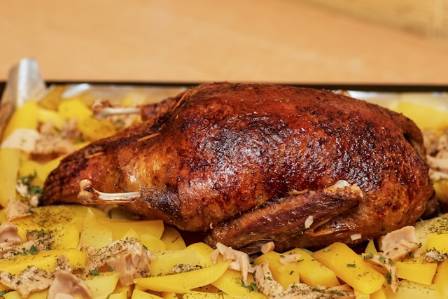
18 Exceptional Turkey Recipes for a Memorable Thanksgiving
Whether you are a seasoned holiday host or a first-time cook tasked with the centerpiece of the meal, achieving a perfect turkey is the ultimate goal. From traditional roasting techniques to creative alternatives, there are countless ways to ensure your bird is the highlight of the table. Success often begins with a solid foundation—like a quality brine and a flavorful herb butter—and ends with the satisfaction of a beautifully carved feast. The following recipes offer a range of methods, including smoking, frying, and slow-roasting, to suit any kitchen setup and personal preference.
SET · en
Air Dry Clay Project Ideas to Try
Air dry clay is one of the most adaptable and enjoyable materials for DIY projects! Whether you’re creating gifts, home decor, or something entirely unique, this medium offers endless possibilities.
SET · en

Complete guide to peace lily care
Your peace lily will stay fresh, vibrant, and full of life when given the right care. Follow a few simple steps to help those elegant white blooms remain upright and attractive. The key is to avoid overwatering and protect the plant from harsh sunlight.
SET · en

Exploring the Oregon Dunes: 4 Guides to North America's Largest Coastal Sand Dunes
Stretching across 40 miles of Pacific coastline, these monumental sand formations create a mesmerizing yet imposing landscape. The Oregon Dunes National Recreation Area, extending from Florence southward, represents North America's most extensive coastal dune system—an extraordinary ecosystem within an almost surreal environment.
SET · en

Classic Portuguese Egg Tart Recipe
I first fell in love with egg tarts during a visit to a small bakery in San Francisco’s Chinatown. The case was filled with perfectly golden pastries, and I couldn’t resist trying a few. One bite in, I was hooked—the crisp, flaky shell paired with a silky, rich custard was unforgettable. After many trials and plenty of tweaking, I finally developed a version at home that delivers that same bakery-level quality every time.
SET · en

Types of Antelope Around the World
Antelopes are hoofed mammals that live in many regions across the globe, including Africa, India, and parts of North America. There are many species of antelope, and each one has its own distinct traits and adaptations. While they may appear similar at first glance, different species vary widely in body size, coloration, and behavior patterns.