Stage bit
The Future of Earth's Tides: A Lunar Departure and Solar Fate
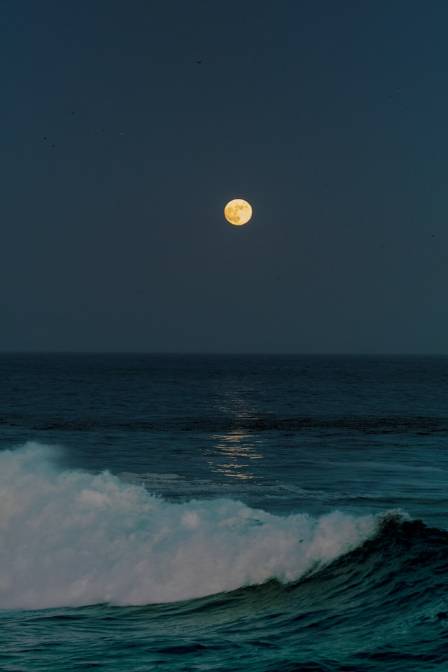
The moon, our faithful companion for billions of years, has played a crucial role in shaping the tidal rhythms of Earth's seas and oceans. However, a cosmic dance is underway as the moon gradually distances itself from our planet. In exploring the implications of this lunar departure, we delve into the mechanisms behind Earth's tides and the long-term cosmic forces at play.
Aria Willow
Mic note
House tip
The full bit continues below under the club spotlight.
Room
Open Mic Desk
The moon, our faithful companion for billions of years, has played a crucial role in shaping the tidal rhythms of Earth's seas and oceans. However, a cosmic dance is underway as the moon gradually distances itself from our planet. In exploring the implications of this lunar departure, we delve into the mechanisms behind Earth's tides and the long-term cosmic forces at play.
The Lunar Drift
Since its formation approximately 4.51 billion years ago, the moon has circled Earth, leaving its mark on our night sky and orchestrating the mesmerizing ebb and flow of tides. The gravitational pull exerted by the moon, known as tidal force, causes water on Earth's surface to bulge towards the side closest to the moon, creating the familiar rhythm of tides. Yet, the moon is not content to remain in close proximity to Earth, steadily increasing its orbit by 3.8 centimeters annually.
Tidal Locking and Orbital Dynamics
The moon and Earth are tidally locked, a celestial waltz where both bodies synchronize their motions, ensuring that we always see the same face of the moon. This dance influences the tidal forces and introduces a subtle interplay. Earth's rotation, completing in 24 hours, pulls the moon ahead in its orbit, while the moon, in turn, exerts a gravitational tug on Earth's tidal bulge, slowing the planet's rotation. Over time, this interaction contributes to a lengthening of Earth's day, with scientists projecting a gain of 2 milliseconds in a century.
The Moon's Cosmic Odyssey
Despite Earth's gravitational influence, the moon's gradual retreat is relentless. Over billions of years, the cumulative effect of the moon's annual drift of 3.8 centimeters becomes significant, leading to an expanding orbit. While this increase may seem inconsequential, its long-term impact raises questions about the fate of Earth's tides.
The Distant Future: A Tideless Earth?
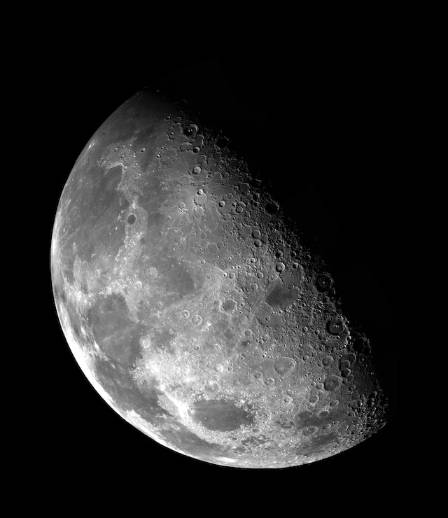
Envision a scenario where the moon's orbit expands to the point of complete departure from Earth's vicinity. The consequence is clear – no more tides in our oceans. The tidal locking, responsible for the moon's steady retreat, will eventually reach a point where Earth permanently faces the moon, marking the end of tidal influence on our seas and oceans. However, the timeline for such an event spans an astronomical 50 billion years.
A Cosmic Reckoning
While the prospect of losing Earth's tides is intriguing, it pales in comparison to a grander cosmic fate. The sun, the central star of our solar system, is on an inexorable path to consume both Earth and the moon in approximately 5 billion years. The relentless nuclear fusion occurring in the sun's core propels it towards increasing brightness, spelling doom for our planet. In this apocalyptic future, the sun's intensified radiance would lead to the boiling of Earth's oceans, melting of remaining ice caps, and the stripping away of the atmosphere.
Conclusion
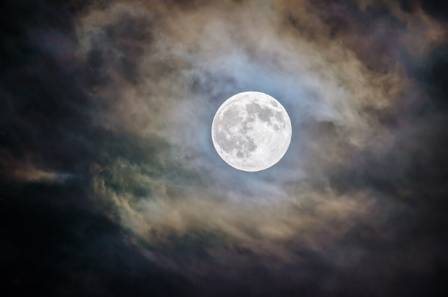
In the cosmic ballet of celestial bodies, the moon's gradual departure offers a glimpse into the distant future of Earth's tides. While the loss of tides may be a concern, the overarching fate of Earth and the moon lies in the fiery embrace of the sun. As we contemplate the eons ahead, the dynamic interplay of cosmic forces reminds us of the impermanence of celestial arrangements and the relentless march of time in the vast expanse of the universe.
More from this set
SET · en
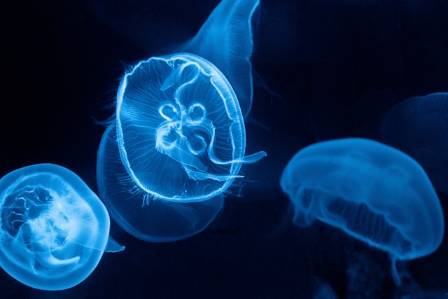
Understanding the Blue Jellyfish: A Guide to Its Anatomy and Life Cycle
A vibrant electric blue form floating near the shore is frequently a blue jellyfish, a striking invertebrate common to the North Atlantic. While their name suggests otherwise, these organisms are not fish; they are a type of plankton that drifts with the waves and wind.
SET · en

Amaryllis From Seed to Bloom
The Fourth of July seems to make an appearance in my amaryllis, at least when viewed through the lens of past and future possibilities. Its spring flowers were marked with red and white stripes, and although the connection may be a little imaginative, the blue sky behind the blooms completed the familiar holiday color combination. Now, the focus has shifted to collecting seeds that could eventually produce countless new plants.
SET · en

The Intelligence of Magpies
Black-billed magpies (Pica hudsonia) are common across Alberta and many parts of western Canada. Although some people consider them troublesome because of their fearless, curious, and sometimes playful behavior, these birds are actually among the most remarkable species in the bird world.
SET · en

Master the Art of the Cityscape: Simplified Steps for Urban Landscapes
For many painters, the prospect of capturing an urban environment is daunting. The sheer complexity of busy streets, numerous colors, and the technical demands of architectural perspective can be overwhelming. However, the secret to a successful cityscape lies in the ability to simplify a chaotic scene into a believable and structured composition. By following a methodical approach, artists can transform everyday city views into compelling works of fine art.
SET · en
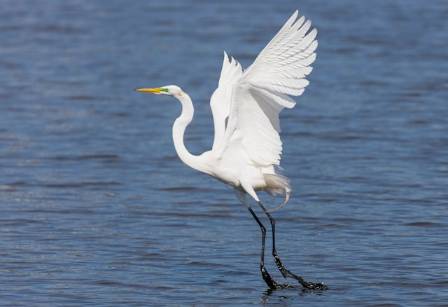
Why Egrets are so Great!
By the end of December, many of Maine’s colonial wading birds have already departed for warmer regions. It is hard to fault them for seeking a more comfortable winter climate. Although these birds are absent during this season, December often brings two particular species to mind: the Great Egret and the Snowy Egret.
SET · en
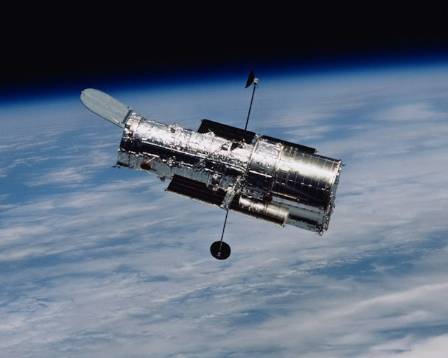
From Sputnik to Firefly: The Fascinating World of Satellites
On October 4, 1957, the announcement “T-minus 10 minutes” echoed through an underground bunker at the Baikonur Cosmodrome in Kazakhstan. Only about 200 meters away, a massive 29-meter R-7 rocket stood on the Tulip launch pad. Its unusual payload was a polished, basketball-sized sphere weighing 83.6 kilograms.