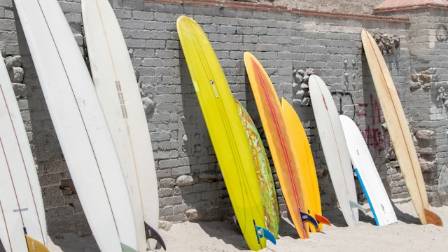
Stage bit
Top 5, First Surfboards when learning to surf
If you have become comfortable catching waves on a soft-top surfboard and are ready to take your surfing to the next level, buying your first fibreglass board can feel overwhelming. There are countless models available, and choosing one that does not match your ability can quickly turn into an expensive mistake. This is something I have seen many surfers experience.
Elara Wynn
Mic note
House tip
The full bit continues below under the club spotlight.
Room
Open Mic Desk
If you have become comfortable catching waves on a soft-top surfboard and are ready to take your surfing to the next level, buying your first fibreglass board can feel overwhelming. There are countless models available, and choosing one that does not match your ability can quickly turn into an expensive mistake. This is something I have seen many surfers experience.
To make that transition easier, I have put together six surfboards that I recommend for beginners who want to develop their skills and move toward an intermediate level.
1. 7S Super Fish 4 Surfboard
When I was working my way from beginner to intermediate, I went through quite a few different surfboards. Unfortunately, many of them did not really match my ability at the time. I spent a lot of money and countless hours searching for a board that would suit the stage of surfing I was at, but I never quite found the right match.
Looking back, I wish I had discovered the 7S Super Fish sooner. I genuinely believe that having this board during that stage of my surfing journey could have helped me progress much faster.
The Super Fish features a step rail that puts additional foam beneath the rider’s chest. This makes paddling and wave catching easier while retaining more defined rails for improved turning. The result is a useful combination of stability and responsiveness once you are up and riding.
This board is particularly well suited to beginner surfers who are making the move toward intermediate surfing. It can work well as a first fibreglass board, especially for someone interested in the popular fish-style shape. It is also a practical option for older surfers or those dealing with a few injuries who still want to catch plenty of waves while riding a board that performs well.
2. Salt Gypsy’s The Dusty
Salt Gypsy is the only brand mentioned here that specifically produces surfboards designed for women. The company focuses on lightweight, sustainable boards that are also reasonably priced, with colour choices including Blush, Mustard, and Navy.
Whether you are still learning or already have plenty of experience riding a longboard, one of the first things you will notice about The Dusty is how effortlessly it paddles. Much of this comes from its extremely flat rocker. At 9 feet long, the board gets into waves very early and smoothly, giving beginners extra time to stand up and commit to the ride.
The 9’0 model carries 69L of volume, providing plenty of flotation. I found it extremely stable beneath my feet and was even able to experiment with moving toward both ends of the board. There is also a subtle concave in the nose, which adds further stability when attempting to move toward the front.
One of my most enjoyable sessions on The Dusty happened during a small-wave day at my local beach. I caught a large number of waves and spent a lot of time trying to work my way toward the nose. On one of the final waves, instead of concentrating on a nose ride or trying to make the wave more complicated, I simply stayed relaxed and enjoyed the ride. The Dusty glided across the face of the wave incredibly smoothly.
3. The Hermit by The Critical Slide Society
The Critical Slide Society developed The Hermit as a moderate-volume board intended to make it easier to get into waves early, particularly when conditions are less powerful. It is also one of the most versatile boards in the brand’s range.
Of all the boards I have tried from TCSS, The Hermit surprised me the most. It quickly became the board I would choose when I wanted to surf every day but only had enough room in my car for one board.
I rode the 7’0 model in the Straw colour, which is the smallest size offered, with 51L of volume. That was more than enough flotation for me. I am 6 feet tall, weigh 85kg, and surf around three to four times a week. For a beginner, however, choosing one of the larger sizes could make the learning process easier.
The Hermit is capable of doing a little bit of everything. It engages the rail nicely through turns and remains surprisingly responsive for a board of this size. I was able to move my feet around and use small cross-steps to create additional speed when sections of the wave became slower. The board also gives the rider enough time to make subtle adjustments when necessary.
Considering how many different conditions the board can handle, it may eliminate the need to purchase several additional boards.
4. Modern’s Highline
The Highline can be an excellent stepping stone for surfers who eventually want to move onto a shortboard. It packs a substantial amount of foam into a more compact shortboard-inspired shape, making it considerably easier to catch waves on a smaller board. Spending more time riding the wave also gives you more opportunities to experiment with new techniques and work on specific areas of your surfing.
The Highline has a well-balanced rocker that helps create smooth takeoffs. When I recently surfed this board, every takeoff felt comfortable regardless of whether the wave was steep and peaky, whether I was sitting deeper, or whether there were small irregularities across the wave face.
Its tail is particularly wide and thick, making it easy to reposition your feet. Even if I made a mistake during takeoff or decided that my back foot needed to move, the board had enough forgiveness to accommodate the adjustment. That extra stability can be particularly valuable while learning. The trade-off is that all of that volume and width means there is more board to turn.
The Highline is the type of board you can become comfortable with and continue riding across a wide variety of conditions. It can also be useful for people with busy schedules who cannot surf regularly, because it makes it easier to return to the water without feeling like you have completely lost your progress.
I also think it would make an excellent first board for a young surfer or beginner. More experienced surfers could enjoy it as a fun option for smaller waves, especially when surfing with the kids or your partner on a warm summer day.
It is available in 5’10, 6’0, 6’2, 6’4, and 6’8, with three colour options: Firestorm, Sea Tint, and Clear.
One characteristic shared by these boards is their generous volume. That extra flotation makes it easier to catch waves while moving from a soft-top to a fibreglass board, helping you maintain the high wave count you have worked hard to build.
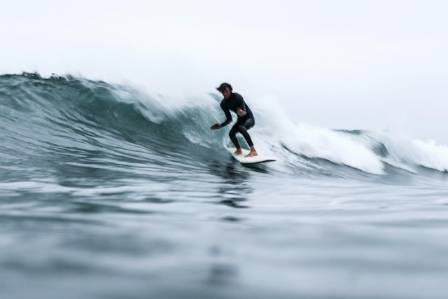
5. The Logger Head by The Critical Slide Society
When I first purchased The Logger Head, I took it to one of my local breaks, 7-mile Beach. The wave there is particularly well suited to longboards, and I still remember my first ride on The Logger Head very clearly.
The conditions were ideal, with clean sets reaching around two feet. I spotted a wave, turned and paddled into it, prepared to stand, looked down the line, and got to my feet. My immediate reaction was that I had finally discovered what longboarding was all about and realized how much I had been missing.
One of my favourite things about The Logger Head is the amount of time it gives you after paddling into a wave. Once you are in position, you have enough time to decide which direction you want to take along the wave. You can even watch what another surfer on the inside is doing before committing yourself, without losing the momentum of the wave.
I am certainly not an especially skilled longboarder, and I am happy to admit that. Riding The Logger Head forced me to return to the fundamentals. It is extremely forgiving and provides an excellent platform for practising skills such as cross-stepping and traditional longboard turns.
The board can also be particularly useful for beginners because it has a noticeably thick construction that provides a stable platform for your feet when standing up and learning to control the board.
The Logger Head costs $1,295 and includes a fin. Although that may initially seem expensive, it is actually quite reasonably priced compared with many other longboards.
6. The Angler by The Critical Slide Society
The Critical Slide Society, also known as TC, designed The Angler as a twin-fin surfboard that can accommodate a broad range of surfing abilities and conditions. After only a few waves on the board, I realized that it suited my own surfing very well.
Critical Slide is built around the uncomplicated pleasure of riding waves. Its boards are not necessarily designed with the goal of winning world titles. Instead, they are made to help surfers get as much enjoyment as possible from every wave. That philosophy is exactly what I look for in surfing.
I cannot perform all of the advanced manoeuvres that some of the surfers at my local board riders club can do, but I can appreciate the excitement of finding a fun wave just as much as anyone.
The Angler rides in much the same playful spirit as its appearance suggests. It packs a lot of enjoyment into a relatively small and colourful shape.
I chose the 5’11 model with 38L of volume in the Ochre colour and immediately loved the colour. The other available option, Artichoke, is equally eye-catching. Once I applied the first layer of wax, the colour stood out even more, which made me even more eager to get into the water. It is definitely a board that attracts attention and catches people’s eyes as you walk toward the beach.
In the past, I have found that 38L is getting close to that oversized, boat-like feeling for me. However, the shape of The Angler prevented it from feeling that way. Instead, I felt that I had selected the right size for my surfing.
For reference, I am 6 feet tall, weigh approximately 85kg, and surf three to four times per week.
More from this set
SET · en
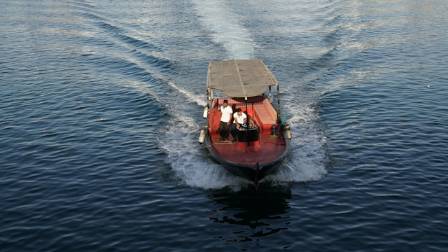
A Beginner’s Guide to Motorboating
Motorboating is an exhilarating way to explore rivers, lakes, and oceans, offering both adventure and a deep connection with nature. Whether you live near the coast or inland waters, taking the helm of a motorboat provides freedom, relaxation, and memorable experiences. For newcomers, knowing the basics, safety guidelines, and proper equipment is key to enjoying this activity confidently and responsibly.
SET · en

5 OF THE BEST 2025 SPORTS CARS UNDER $50K, RANKED BY CAR AND DRIVER
Sports cars don’t have to come with a luxury price tag—for drivers seeking quick acceleration and sharp handling, Car and Driver’s rigorous testing has identified five standout 2025 models that keep costs under $50,000. Ranked using approximately 200 data points, including performance metrics, fuel efficiency, comfort, cargo capacity, and overall value, these vehicles undergo consistent, fair comparisons—from 70 mph braking and cornering grip to real-world highway fuel economy—ensuring a comprehensive evaluation of both track capability and daily usability.
SET · en

Ten Fascinating Insights Into the Aurora Borealis
In Roman lore, Aurora represented the deity of the first light, while "borealis" originates from the Greek term for wind. Together, "aurora borealis" translates to "dawn wind," though most people today simply call them the Northern Lights. This natural wonder has captivated humanity for millennia and remains a top priority for travelers exploring the Arctic.
SET · en

The Art of Flower Arranging: Techniques for Stunning Floral Designs
There is often much more planning behind a beautiful flower arrangement than it may seem. The art of flower arranging is not simply a matter of putting a handful of random stems into a vase. It involves understanding how shape, color, proportion, and empty space interact so that the flowers feel intentional rather than simply placed together.
SET · en

Finding the Extraordinary in the Ordinary: A Birthday Weekend at Alpine Lakes High Camp
For as long as I can remember, Jasper has called weekend getaways “holidays.” The second I start packing his overnight bag, he bounces over, eyes wide: “Are we going on a holiday?” Once we’re in the car, he announces proudly, “We are going on an adventure!” In his short life, Jasper has already checked off more adventures than many people do in a lifetime—hiking in Norway, cruising past Icelandic glaciers, kayaking in the ocean—and now, staying in an alpine hut joins that list. As parents of a young child, it’s tempting to leave him with grandparents when we travel. But in the end, he always adds an extra layer of joy, creativity, and pure happiness to our trips. At Alpine Lakes High Camp, Jasper threw himself into every moment: strutting around the grounds like a tiny explorer, curling up on the cabin bed with a stack of books, and tracing fresh snow tracks with his boots. On the drive home, he summed it up perfectly: “Let’s go back to the cabin!”
SET · en

The Tree-Climbing Relatives of Raccoons
South American coatis are close relatives of raccoons and share many similar traits with them. Like raccoons, they have a recognizable striped tail that helps them maintain balance while moving through trees.