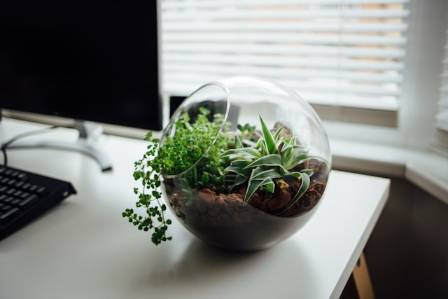
DIY Closed Terrarium: How to Create Your Own Bottle Garden

Stage bit

DIY Closed Terrarium: How to Create Your Own Bottle Garden

Did you know that a closed terrarium, a sealed bottle garden, can sustain itself with little to no maintenance? Creating a self-sustaining ecosystem in a glass container is both fascinating and rewarding. Unlike open terrariums that are ideal for arid plants like succulents, closed terrariums provide a humid environment that favors ferns and other moisture-loving species.

V

Vicky

Mic note

House tip

The full bit continues below under the club spotlight.

Room

Open Mic Desk

This guide focuses on closed terrariums, which function as miniature greenhouses, requiring minimal upkeep while creating a thriving natural display. Read on to learn how to build your very own self-sustaining bottle garden.

Materials Needed for a Bottle Garden

Small stones or pebbles for drainage
Activated charcoal
Nutrient-rich potting mix
Small plants that thrive in high humidity
Springtails (optional, for natural maintenance)
Preserved mosses
A glass container with a lid (repurpose a jar or find a vintage one at a thrift shop)
A substrate barrier or sphagnum moss

Best Plants for a Closed Terrarium

For an enclosed environment, choose plants that thrive in high humidity, such as ferns, calathea, and peperomia. These species adapt well to the greenhouse-like conditions inside a sealed container.
 
Slow-growing plants work best to prevent overcrowding, so consider options like nerve plants (Fittonia), peperomia, and live mosses. Avoid succulents, cacti, and air plants, as they require drier conditions and good airflow.
 

Recommended plants for closed terrariums:
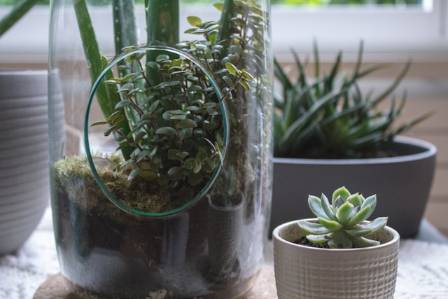
Maidenhair Fern
Tradescantia varieties
Creeping Fig
Ivy
Nerve Plants (Fittonia)
Peperomia

Step-by-Step Guide to Creating a Bottle Garden

1. Create a Drainage Layer (False Bottom)
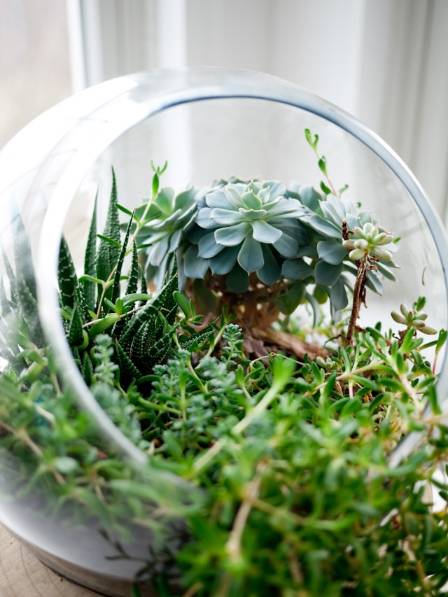
A proper drainage layer is essential for excess water management, preventing root rot.
Start by adding a layer of small stones or pebbles at the bottom of your glass container. This allows excess water to collect away from plant roots, reducing the risk of overwatering. If you tend to water generously, this step is crucial.
For added aesthetics, consider using a thin layer of decorative pumice followed by a thicker layer of lava rocks.

2. Add a Separation Layer

To prevent plant roots from growing into the drainage layer, add a barrier between the stones and the soil.
A separation layer ensures longevity by keeping roots from reaching the water reservoir. Use a mesh screen, a substrate barrier, or a layer of sphagnum moss. Simply place the barrier inside, allowing it to expand as it settles into the bottle.

3. Add Activated Charcoal

This step is essential for maintaining a healthy environment inside your terrarium.
Activated charcoal helps filter toxins, absorb odors, and prevent mold growth within the sealed container. A thin layer of charcoal between the drainage and soil layers will ensure a fresher, longer-lasting terrarium.

4. Introduce Decomposers (Optional)

To naturally manage mold and decay, consider adding springtails.
Springtails are tiny beneficial insects that feed on mold and organic debris, acting as a built-in cleanup crew for your terrarium. While optional, they help maintain balance within your ecosystem.

5. Add the Potting Mix

Use a nutrient-rich, well-draining potting mix to support plant growth.
Choose a soil blend with organic compost for optimal plant nutrition. Coco coir can also be a great addition. Generally, the soil layer should be about twice as thick as the drainage layer, but adjust depending on your container’s size.
Pro tip: Pre-moisten the soil before adding it to help plants establish quickly.

6. Plant Your Greenery

Select plants that fit through the bottle’s opening and carefully place them inside.
Here are some ways to position plants in a bottle garden:
Use long tweezers to place individual cuttings
Tie plants to a string and gently lower them into position
Drop them in and use tools to adjust their placement
Smaller plant cuttings with well-developed root systems work best. Water-propagated plants adapt quickly since they are accustomed to high-moisture conditions.
Worried about plant placement? Don’t stress! Unlike traditional gardening, bottle gardens allow nature to take its course. Simply arrange your plants and let them settle naturally.

7. Add Mosses and Decorative Elements

Enhance your terrarium’s aesthetic with natural touches.
Layer in preserved moss, decorative stones, driftwood, or other natural elements to complete the look. Rather than precisely arranging each piece, drop them in and let nature shape the final design.

8. Water and Seal Your Bottle Garden

Once satisfied with the arrangement, hydrate the terrarium and seal it.
Use filtered water and distribute it evenly—using a turkey baster can help direct water along the container walls. This also helps clean dust from the glass.

Caring for Your Closed Terrarium

Now that your bottle garden is complete, sit back and let it maintain itself!
For best results:
Place the terrarium in indirect sunlight
If sealed properly, the water cycle will sustain the plants without additional watering
After watering, moisture will evaporate, condense on the glass, and drip back into the soil, maintaining a continuous cycle
If plants outgrow the space, trim them with sterilized scissors
Occasionally open the container to refresh the air, if needed
Remove any dead plant material using long tweezers
If mold appears, consider adding decomposers like springtails
Final Thoughts
We hope this guide inspires you to create your own closed terrarium! A bottle garden makes a beautiful centerpiece, a unique bookshelf accent, or a natural display for any space. The most stunning terrariums mimic real landscapes, incorporating native plants and natural elements.
No need for expensive materials—step outside and find inspiration in the natural world around you.
Happy growing!

More from this set

ST

SET Ā· en

Cold Brewed Iced Tea with Fruit

Cold Brewed Iced Tea with Fruit

This fruit iced tea is one of the easiest and most refreshing drinks you can make for warm weather. It looks beautiful in jars, tastes light and delicious, and is perfect for keeping in the fridge all summer long. I often prepare several jars at once so I always have a ready-to-go drink for busy days, guests, or simply cooling down.

ST

SET Ā· en

5 Fascinating Facts About Penguins

5 Fascinating Facts About Penguins

Penguins are some of the most iconic birds in the world, known for their black-and-white plumage and remarkable adaptations to cold environments. While many people associate them with Antarctica, these birds have unique behaviors, origins, and challenges that make them fascinating to learn about.

ST

SET Ā· en

Best SUVs of 2026

Best SUVs of 2026

SUVs have surged in popularity in recent years, with a vast range of models now available in different sizes and styles. With so many options on the market, finding the right SUV for your needs can feel overwhelming.

ST

SET Ā· en

The 2026 World Luxury Car of the Year

The 2026 World Luxury Car of the Year

Lucid Group announced on April 1, 2026, that its all-electric SUV, the Lucid Gravity, has earned the prestigious 2026 World Luxury Car of the Year title from the World Car Awards.

ST

SET Ā· en

The 4 Seasons: Nature's Annual Cycle Explained

The 4 Seasons: Nature's Annual Cycle Explained

The four seasons — spring, summer, autumn (fall), and winter — are distinct periods of the year that encompass unique weather patterns and varying lengths of daylight. These cycles profoundly affect our environment, shaping the natural world and influencing human activities. Let's delve into each season's characteristics and the fascinating reasons behind their phenomena.

ST

SET Ā· en

Mango Smoothie Recipe

Mango Smoothie Recipe

A few days ago, my local supermarket was offering oversized mangoes at a discount, so I bought quite a few. Once they reached peak ripeness, I spent roughly half an hour peeling, slicing, and freezing the fruit in chunks. Now I have a generous supply of frozen mango pieces ready for smoothies. Mornings feel noticeably more refreshing when I start the day with this mango smoothie.