
Stage bit
Beginner's Guide to Painting: A 7-Step Journey to Vibrant Cityscapes
Transitioning into the world of art is an exhilarating process of discovery. This comprehensive guide is designed for those who want to master the art of painting, with a specific focus on creating fashionable, vibrant, and colorful cityscapes. By following these steps, you will learn how to move from a blank canvas to a high-energy urban masterpiece.
Mia Harper Collins
Mic note
House tip
The full bit continues below under the club spotlight.
Room
Open Mic Desk
Transitioning into the world of art is an exhilarating process of discovery. This comprehensive guide is designed for those who want to master the art of painting, with a specific focus on creating fashionable, vibrant, and colorful cityscapes. By following these steps, you will learn how to move from a blank canvas to a high-energy urban masterpiece.
Step 1: Define Your Purpose and Creative Vision
Before touching a brush to the canvas, it is essential to consider why you are drawn to the urban aesthetic. Are you captivated by the neon glow of a city at night, the architectural rhythms of a skyline, or the fashionable energy of a busy street?
Your intent dictates your learning path. If you aim to capture the "vibrant" and "fashionable" side of a city, you might focus more on color theory and dynamic brushwork rather than the rigid, mathematical precision of traditional architectural drawing. Identifying your "big idea"—such as "the reflection of city lights on a rainy pavement"—will give your work a clear voice and direction.
Step 2: Select Your Medium (Acrylics, Oils, or Watercolors)
Choosing the right medium is a foundational decision that affects the "feel" of your cityscape.
-
Acrylics (The Modern Choice): Ideal for vibrant cityscapes because they dry quickly, allowing you to layer bold, bright colors rapidly without them mixing into "mud." They are perfect for the sharp edges found in urban architecture.
-
Oils (The Rich Choice): Oils offer a luminosity and blending capability that is unmatched. They are excellent if you want to create soft, glowing atmospheric effects around streetlamps or hazy city horizons.
-
Watercolors (The Fluid Choice): Watercolors are perfect for an "impressionistic" city look, where the buildings and lights bleed into one another to suggest motion and energy.
Step 3: Assemble Your Urban Painting Kit
To create a fashionable and colorful cityscape, you don't need an exhaustive list of supplies, but quality in key areas is vital.
-
Surface: A primed canvas for acrylics/oils or heavy-duty cold-press paper for watercolors.
-
Brushes: A mix of large flat brushes for sky and buildings, and small round brushes for fine details like windows or street signs.
-
Palette Knives: Essential for "fashionable" cityscapes, as they allow you to apply thick, textured paint (impasto) to represent the physical surfaces of the city.
-
Vibrant Palette: Beyond the basics, include "fashionable" colors like Phthalo Blue, Bright Magenta, or Lemon Yellow to achieve that high-octane urban glow.

Step 4: Master the Artistic Fundamentals
To make a city "pop," you must understand the core pillars of art:
-
Color and Value: In a colorful cityscape, the relationship between light and dark is everything. The "value" (how light or dark a color is) creates the illusion of a glowing window against a dark wall.
-
Composition: Use "leading lines"—such as a road or the edge of a skyscraper—to pull the viewer's eye into the center of your fashionable metropolis.
-
Edges: A "fashionable" style often uses a mix of hard edges (the sharp silhouette of a building) and soft/lost edges (the glow of a neon sign blurring into the night air).
Step 5: Select Your Urban Subject
Choosing what to paint is a challenge of its own. Look for a scene that provides high contrast and exciting shapes. Ask yourself:
-
Is there a clear "big idea" (e.g., "The rush of the evening commute")?
-
Does the scene have a fashionable color harmony (e.g., a palette of teals and oranges)?
-
Does the architecture provide an interesting geometric design?
A photo of a street in Tokyo or New York at dusk often provides the perfect balance of shadow and vibrant artificial light to challenge a beginner.
Step 6: Execute Your Vibrant Cityscape
When you begin your first painting, start with the "General to Specific" approach.
-
The Underpainting: Map out the largest shapes and colors with a thin, light wash. Don't worry about windows yet; just block in the sky and the massive shapes of the buildings.
-
Building Form: Start adding the mid-tones. Define where the light is hitting the side of a skyscraper versus where it is in shadow.
-
The Vibrant Details: This is where the "fashionable" element comes in. Add the high-saturation colors—the neon signs, the streaks of car taillights, and the reflections in the glass. Use bold, confident brushstrokes or a palette knife to add texture.
[Image showing a painting progress: from basic shapes to detailed cityscape]
Step 7: Critique and Refine
Once your painting is dry, step back and view it with a critical eye. Does it feel "vibrant"? Do the colors harmonize?
Ask yourself if the composition draws the viewer into the city or if it feels cluttered. Don't be discouraged if your first attempt isn't perfect. The "vibrant" style thrives on energy and movement; sometimes a "mistake" or a stray paint splatter actually adds to the fashionable, urban feel of the piece. Review your work, identify one thing to do differently next time, and start your next urban adventure.
The secret to mastering colorful cityscapes is a cycle of learning, experimenting with bold colors, and constantly observing the world around you.

More from this set
SET · en

Snow-Covered Mountains: Nature's Majestic Wonders
Snow-covered mountains stand as some of the most awe-inspiring natural wonders on Earth. Their towering peaks, blanketed in white, captivate adventurers, photographers, and nature lovers alike. From the soaring Alps to the mighty Himalayas, these mountains create some of the most picturesque and serene landscapes. Let’s explore some of the most stunning snow-covered mountains around the world.
SET · en
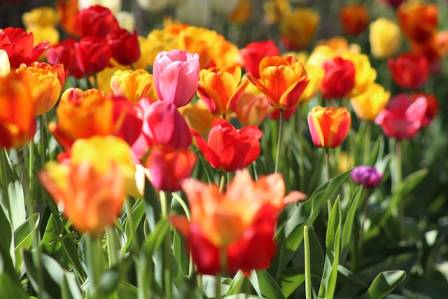
A Practical Guide to Planting and Caring for Tulips
Tulips are vibrant, spring-blooming bulbs belonging to the Liliaceae family. They are widely recognized for their smooth, cup-shaped petals and are available in a vast array of colors ranging from brilliant reds and yellows to soft whites and deep purples. Originating from Central Asia, these flowers have become global favorites, particularly in regions with cool climates. They add significant character and elegance to any garden setting, making them a popular choice for both beginner and experienced gardeners.
SET · en

Kunlun Volcanic Group
The Kunlun Volcanic Group, also called the Ashiköli Volcanic Field, is a volcanic region located in northwestern Tibet. The area is part of a larger volcanic zone that includes eight additional volcanic fields nearby. The volcanic field lies inside a basin that contains three lakes.
SET · en

Simple Homemade Pumpkin Soup
This effortless pumpkin soup is destined to become your favorite autumnal comfort food. Providing a clear, step-by-step guide to achieving the perfect seasonal flavor, this recipe captures the essence of fall. There is a unique warmth found in the creaminess of roasted squash that feels like the culinary version of changing leaves. While any pumpkin variety works, roasting your squash whole—rather than boiling it—results in a more velvety texture and an intensified, sweet profile that elevates the entire dish.
SET · en

Understanding Dolphins and Their Biological Classification
Dolphins belong to the scientific order known as Cetacea, a group of aquatic mammals that includes approximately 90 different species of whales, dolphins, and porpoises. Within this diverse category, dimensions vary significantly; the massive blue whale stands as the largest representative, while various river dolphins are among the smallest. A mature blue whale can reach an astounding length of 31 meters and weigh as much as 125 tons. In contrast, species like the La Plata dolphin are quite diminutive, rarely growing beyond 1.75 meters.
SET · en

Learning About the Indian Spot-Billed Duck Discovering the Secrets of This Special Bird Species
Scattered across India’s landscapes, the Indian Spot-Billed Duck is a wonderful sight to see. It has a unique large bill decorated with red and yellow spots, making it a favorite among bird experts. The bird gets its name from these colorful marks, which make it stand out from other duck species. Beyond being visually appealing, this duck plays a crucial role in keeping wetland ecosystems healthy. It mainly feeds on plant matter, which helps control the growth of water vegetation and maintain a balanced environment. Its distinct call—a loud “kwek-kwek”—rings out in its habitats, adding a special touch to the peaceful surroundings. With all these charming traits, the Indian Spot-Billed Duck has become one of India’s most beloved bird species.