Stage bit
Five robotic systems that can paint like human artists
The growing overlap between robotics and the art world is producing remarkable outcomes, gradually blurring the boundary between human imagination and machine-driven production.
Samuel Pierce
Mic note
House tip
The full bit continues below under the club spotlight.
Room
Open Mic Desk
The growing overlap between robotics and the art world is producing remarkable outcomes, gradually blurring the boundary between human imagination and machine-driven production.
Industrial robots have long been used for highly accurate, repetitive processes such as automotive painting and assembly. Now, a new class of robotic arms is emerging—systems capable of producing artwork that resembles human creative expression.
These machines go beyond executing fixed instructions. Many are now designed to learn from input, adapt their movements, and generate original visual works that raise deeper questions about the nature of creativity itself.
According to Albert Nubiola, CEO of RoboDK, robotic systems are reshaping visual art by offering creators new methods and tools for expression, as demonstrated in exhibitions featuring robot-generated paintings in London.
Below are several well-known examples of robotic arms used in artistic painting and creative experimentation.
Kuka Agilus with Ai-Da
The Kuka Agilus robotic arm plays a key role in the development of Ai-Da, often described as one of the first highly realistic robot artists.
Ai-Da uses built-in cameras to observe subjects and, with the support of AI systems, guides the Kuka robotic arm to produce paintings on canvas. Her work has been displayed internationally, covering styles ranging from realistic portraiture to abstract compositions.
This collaboration highlights how robotic systems can move beyond mechanical execution and begin interpreting visual information in creative ways.
e-David (Electronic Drawing and Painting Device)
Created at the University of Konstanz, e-David is a robotic painting system designed to observe its own work through a camera and continuously adjust its technique.
It is capable of switching between brushes and painting styles, reproducing a wide variety of strokes and layering methods similar to those used by human artists.
What makes e-David notable is its iterative learning process, where it evaluates its output and improves its painting strategy while working, effectively refining its artistic performance over time.
Nextage by Kawada Robotics with Kohei Ogawa
The Nextage robot from Kawada Robotics has been used in collaboration with artist Kohei Ogawa to explore robotic-assisted painting.
In this setup, the robot is guided by human direction to hold a brush and apply paint with controlled and expressive movement.
This partnership demonstrates how robots can serve as creative assistants, translating human artistic intent into precise physical action.
ABB IRB 1200 with CloudPainter by Pindar Van Arman
Artist Pindar Van Arman has worked extensively with ABB industrial robots such as the IRB 1200 to develop his CloudPainter project.
These systems rely on algorithms that introduce variation and controlled randomness, producing abstract artworks that often appear organic and unexpected.
The result is a form of machine-assisted creativity where code, mechanical motion, and unpredictability combine to generate original visual pieces.
Fanuc Robots in Artistic Projects
Fanuc industrial robots have also been adopted in various artistic experiments and collaborations.
Known for their precision and stability, these robotic arms provide artists with a tool capable of executing complex brushwork, large-scale movements, and highly consistent patterns.
In many projects, they function as instruments that bring human-designed concepts to life with extreme accuracy and repeatability.
Is This a Commercial Market or Research Exploration?
The question of whether robotic painting systems represent a viable consumer market or remain primarily research-focused is still open.
At present, widespread adoption in homes or everyday studios is unlikely due to high costs, complex setup requirements, and the specialized knowledge needed to operate these systems.
However, several potential future directions are emerging:
Collaborative artistic production where humans and robots jointly create high-value artworks
Educational and therapeutic uses that explore creativity, learning, and emotional expression through interaction with robotic systems
Large-scale public installations where robots produce murals or live art experiences
Industrial design applications where robotic painting enables unique textures and finishes
Although not yet a mainstream market, these developments highlight growing interest in robotic creativity and its practical possibilities.
Conclusion
Robotic arms in art represent more than just a technological novelty. They reflect an expanding relationship between computation, mechanics, and human creativity.
Whether these systems become widely commercialized or remain within research and experimental art spaces, they already demonstrate how machines can participate in domains once considered uniquely human.
In doing so, they challenge traditional ideas of creativity while opening new pathways for artistic exploration and technological innovation.
More from this set
SET · en

Strawberry Cake Facts for Children
A strawberry cake is a delightful dessert where strawberries play the central role. Strawberries can be incorporated directly into the cake mix, used as a topping, or even blended into the icing. These tasty cakes are commonly enjoyed chilled.
SET · en
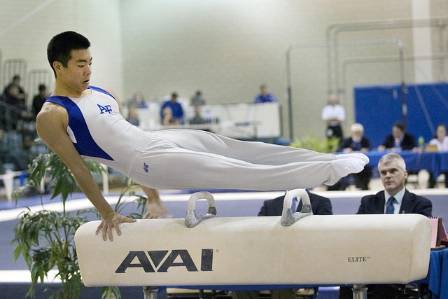
The Evolution of the Gymnastics Pommel Horse
Men’s artistic gymnastics on the pommel horse traces its roots to practical training with living horses, specifically equus caballus. Its history can be traced back to Alexander the Great and his Macedonian soldiers around 315 BC, who practiced mounting and dismounting horses using an early version of the pommel horse.
SET · en
Bobcats in the United States: Understanding Their Role in Nature
Bobcats are medium-sized wild felines that naturally occur throughout North America. They are highly adaptable animals capable of surviving in a variety of environments. Their most recognizable characteristics include black tufts on their ears and a naturally short tail, which is the feature that gives them their common name.
SET · en
Amazing Cliff Jumps Around the World
Cliff jumping is an adventure that demands courage, confidence, and a willingness to challenge your fears. For some people, it is a way to conquer their nerves, while for others, it is simply an exciting experience to share with friends.
SET · en
8 Essential Tips for Visiting the Colosseum in Rome
The Colosseum is one of Rome’s most iconic landmarks, drawing millions of visitors each year to explore its ancient history and architecture. To make the most of your visit, here are eight valuable tips that will help you avoid the crowds, capture the best views, and truly immerse yourself in the history of this magnificent amphitheater.
SET · en

5 Enjoyable Cycling Tours for a Two-Wheel Vacation
Exploring a new destination on a bike lets you fully immerse yourself in the surroundings while getting your heart rate up. These five exciting cycling tours will have you gliding past stunning scenery, soaking up the sunshine, and breathing in fresh air as you discover new places.