Stage bit
Stones in the Sea
I was four years old when my grandfather and I walked along the shoreline of a Southern California beach. Or perhaps more accurately, he was walking while I repeatedly slowed him down.
Dominic Ellington
Mic note
House tip
The full bit continues below under the club spotlight.
Room
Open Mic Desk
I was four years old when my grandfather and I walked along the shoreline of a Southern California beach. Or perhaps more accurately, he was walking while I repeatedly slowed him down.
It wasn’t simply because I was a small child with shorter legs struggling to match his pace. I was distracted by every little object scattered across the sand. A broken piece of clam shell, a fragment of a sand dollar, or a weathered crab claw left behind by a hungry seabird all seemed extraordinary to me. Each discovery felt like a priceless treasure that deserved to be saved.
Whenever I found something interesting, I carefully picked it up from the damp sand and handed it to my grandfather. I completely trusted that he would protect every single item I gave him.
At least, that was what I believed.
He accepted each treasure with a serious expression and placed it into his shirt pocket while I continued searching for more. What I didn’t realise at that young age was that he was performing a small trick. While I was focused on my next discovery, he would quietly hide each object in his palm and drop it behind us, leaving only the illusion that my collection was safely stored away.
The Endless Fascination of What the Ocean Reveals
Growing up in Los Angeles, the ocean has always felt like part of who I am. The beach is more than a place I visit; it feels like something naturally connected to my identity.
I was too young to remember that particular walk with my grandfather, but he shared the story with me shortly before he passed away. What I do remember is my lifelong fascination with the things the sea leaves behind. No matter which coastline I visit, I am drawn to the small gifts scattered along the sand.
One of my earliest beach memories involves a simple pebble rather than a beautiful shell. While other children might have been attracted to colourful seashells, I became fascinated by a grey stone shaped roughly like my stepfather’s flip-top cigarette lighter.
The stone was covered with tiny tunnels and had one opening that passed completely through it. The hole was large enough for me to place the stone over my finger like an unusual oversized ring.
Holding it up to my eyes opened a world of imagination. Looking through the opening, I pictured distant landscapes and mysterious places waiting beyond the stone.
In a way, my childhood imagination was surprisingly close to reality.
The Legends Behind Holey Stones
Pebbles with natural holes have many names, including Holey Stones, Hagstones, Odin Stones, Witch’s Amulets, and Wish Stones. Across different cultures, these unusual rocks have collected centuries of folklore and magical beliefs.
Many traditions considered them special objects with mystical abilities. One popular belief was that looking through the opening allowed people to see hidden worlds, including spirits, fairy kingdoms, or even visions of the future.
As a child, however, my curiosity was not about magic. I simply wanted to know how those mysterious holes formed.
“What made these holes?” I once asked an adult nearby after finding one of these stones.
“Worms,” came the answer.
That explanation was close to being believable—but it wasn’t correct.
The Real Creators: Rock-Boring Clams
The true creators of many holey stones are not worms but tiny marine creatures known as boring clams.
One remarkable species is the California piddock, a mollusk that creates burrows inside solid rock to make a safe home. Along the Pacific coastline, from Baja California to Oregon, areas of exposed rock often reveal the work of large colonies of these creatures. Over time, their activity transforms hard stone into surfaces filled with holes.
Piddocks begin life as microscopic larvae drifting in the ocean. They locate suitable places by detecting chemical signals released by other piddocks. Once they find sandstone, shale, hard mud, concrete, or another appropriate surface, they attach themselves and begin building their shells.
An adult piddock can grow to around six inches long. Its shell resembles a pair of rough, pale wings, with sharp ridges along one edge. These ridges act like tiny tools, scraping against the surrounding rock as the clam slowly rotates and enlarges its burrow.
The process is incredibly slow, advancing only about one-tenth of an inch to two inches each year.
Piddocks can survive for two decades and may create tunnels nearly a foot deep. Because their shells become wider at the bottom of the hole than at the opening, many eventually become permanently trapped inside their rocky homes unless natural events such as storms or earthquakes break the stone apart.
Experts at the Cabrillo Marine Aquarium in San Pedro, California, have discovered that many coastal cliffs contain fossil evidence of ancient boring clams. Some holey stones found on beaches today are actually remnants of prehistoric clam colonies that existed thousands of years ago.
The special stone I found as a child may have been shaped by clams during the same era that ancient humans were constructing Stonehenge.
Holey Stones Around the World
These unusual stones are not limited to California. Boring clams and other natural processes create them in many regions across the planet.
Along the pebble beaches of southern England, finding a rare Hagstone is considered a fortunate discovery. Many of these stones are formed not by animals but by the slow work of wind and water gradually wearing away the rock.
Freshwater environments can also create holey stones. They may appear along the shores of Lake Michigan or beside mountain rivers where powerful snowmelt currents reshape rocks over time.
Because water is the common force behind their creation, these stones have long been connected with feminine energy, spiritual traditions, and ideas of protection. Folklore claims that Witch’s Amulets can guard children, boats, homes, and animals. Some people use them in healing practices, spiritual rituals, or as symbols for removing negative emotions and unwanted energy.
A Visualization Exercise for Letting Go of Worries
The belief that holey stones can absorb negativity inspired a meditation practice I created during the uncertainty and stress of the pandemic.
This exercise does not require previous meditation experience. All that is needed is a quiet place where you can relax, close your eyes, breathe deeply, and allow your imagination to guide you.
Imagine Your Own Private Beach
Picture yourself standing on a peaceful stretch of shoreline. The coast curves gently toward rocky cliffs on both sides, creating a private space where you can feel completely safe and undisturbed.
The weather is calm. Sunlight slowly breaks through the last traces of morning fog, revealing a bright blue sky. The day will become warm, but for now a cool breeze brushes across your face. Far away, the horizon appears slightly blurred by the moisture in the air.
You feel protected here. No one is asking anything from you. This quiet place belongs only to you.
As your body relaxes, your busy thoughts begin to slow. Pay attention to every detail around you.
Can you smell the salt carried by the ocean breeze? Or are you standing beside a freshwater lake with deep, clear water?
Are your feet covered by shoes, or are your toes sinking directly into the sand?
Listen carefully to the water. Are the waves powerful and loud, rushing toward the shore with white foam? Or is the surface peaceful, gently touching your feet?
Finding Your Personal Stone
Look down at the sand beneath you. Partly hidden near your feet is a stone almost as large as your palm.
You pick it up and brush away the damp sand covering its surface.
The pebble feels comfortable in your hand. Time, wind, and water have softened its edges. Small holes appear across its surface. Some pass completely through the stone, while others form tiny openings that hold drops of water or grains of sand.
This is your stone.
It has one special ability: it can absorb the fears and worries you no longer wish to carry.
Place every concern into the stone. Release your regrets, your doubts, your fears about the future, and the problems beyond your control. Put every heavy thought into its holes until nothing remains inside you.
When you finish, study your stone carefully.
Remember its colour, its shape, its texture, and the feeling of it resting in your hand.
Then throw it into the ocean as far as you can.
Watch it disappear beneath the waves. Imagine all the anxiety and negativity leaving with it, carried away by the moving water.
The Returning Stone
The true power of your stone is that it can always return.
Whenever you feel overwhelmed by fear or worry, you can return to this imagined beach. Walk along the shoreline, look down at the sand, and find your holey stone waiting there.
It has come back to you, refreshed and renewed.
The stone is ready once again to help release the thoughts and emotions that no longer serve you, reminding you that even small treasures from nature can hold meaning, comfort, and a sense of peace.
More from this set
SET · en
12 Effortless Travel Outfits That Keep You Stylish and Comfortable
Packing for a trip doesn’t need to feel overwhelming. The smartest outfits are those that combine comfort, practicality, and just enough polish to take you from the airport to dinner without an outfit change. Whether you’re jetting off for a weekend city escape or embarking on a longer adventure, these 12 versatile looks are ready to keep you at ease while still looking put-together.
SET · en
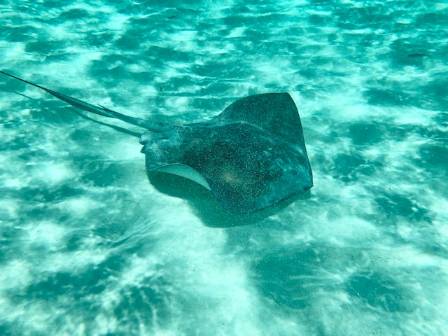
The Mysterious Giant of Tropical Rivers
The giant freshwater stingray may be the largest fish species living in freshwater, yet it remains one of the least studied of the world's enormous fish. Scientists still have limited information about how many exist, the habitats they prefer, and whether they occasionally move into marine waters where other stingray species are commonly found.
SET · en
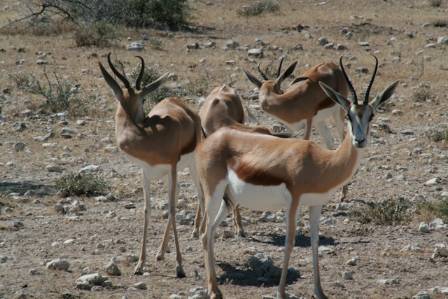
Types of Antelope Around the World
Antelopes are hoofed mammals that live in many regions across the globe, including Africa, India, and parts of North America. There are many species of antelope, and each one has its own distinct traits and adaptations. While they may appear similar at first glance, different species vary widely in body size, coloration, and behavior patterns.
SET · en

The Best Bookcases for Any Space
Whether you need extra shelving for a home office, want to create a warm reading nook, or simply need an attractive place to organize books and display decorative pieces, choosing the right bookcase can make all the difference. With countless styles available, the Wayfair Verified program helps simplify the shopping process by highlighting highly rated bookcases that have also been reviewed for quality. Below are several customer-loved options that combine practical storage with dependable construction.
SET · en

The Most Tall: Meet George, the Tallest Giraffe On Record
George the Masai bull giraffe became a legendary figure for his extraordinary height. This article revisits his arrival, growth, and legacy, while also offering some context about giraffe height in general.
SET · en

How to Draw a Hot Air Balloon Easily
Looking for a simple way to draw a hot air balloon? You’re in the right place! Whether you’re a complete beginner or helping kids explore creativity, this easy step-by-step tutorial is perfect for all ages.